If a paper tube line is giving you weak bonding, uneven diameter, or inconsistent cut length, the problem usually starts with process understanding rather than raw speed. The spiral paper tube machine working principle is straightforward at a basic level, but in production, each stage affects tube strength, dimensional accuracy, and operating cost.
For factory owners, production managers, and buyers comparing equipment, understanding how the machine works helps with more than operation. It helps you choose the right configuration, set realistic output targets, and avoid buying a machine that looks fast on paper but performs poorly on your actual tube specifications.
What is the spiral paper tube machine working principle?
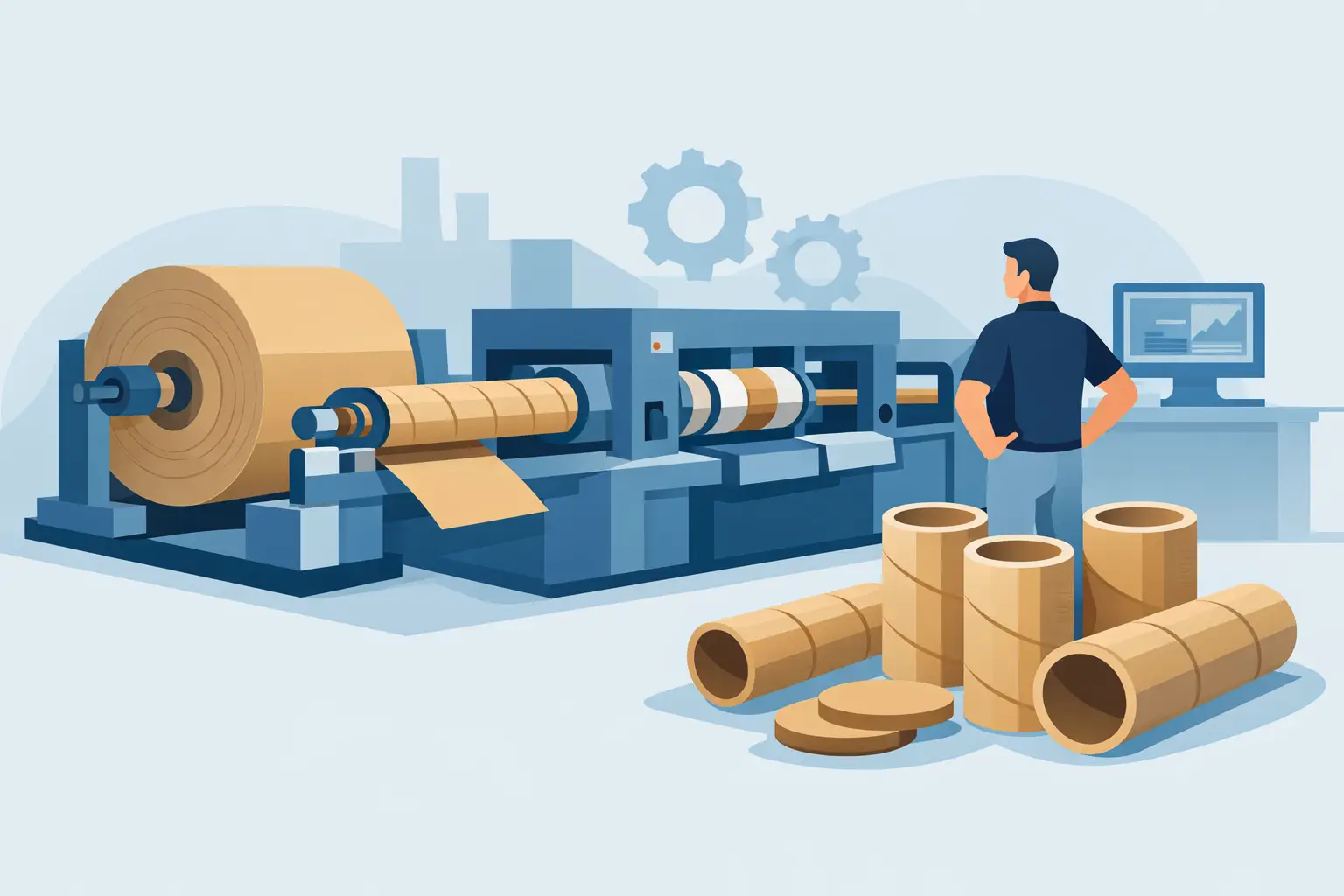
The spiral paper tube machine working principle is based on continuous winding. Multiple paper webs are unwound from reel stands, guided into the forming section, coated with adhesive, and wrapped at an angle around a mandrel. As the layers build, the paper forms a rigid tube with a spiral seam. The finished tube then moves forward continuously and is cut to the required length by an online cutting unit.
This method is different from parallel winding, where layers wrap straight along the tube axis. Spiral winding is widely used because it supports continuous production, strong structural bonding, and flexible tube dimensions for applications such as paper cores, textile tubes, packaging tubes, film cores, and industrial winding cores.
In practical terms, the machine converts flat kraft paper into a round, bonded, and dimensionally controlled tube through synchronized mechanical motion, adhesive application, pressure forming, and cutting control.
How the process works from paper reel to finished tube
Paper feeding and web alignment
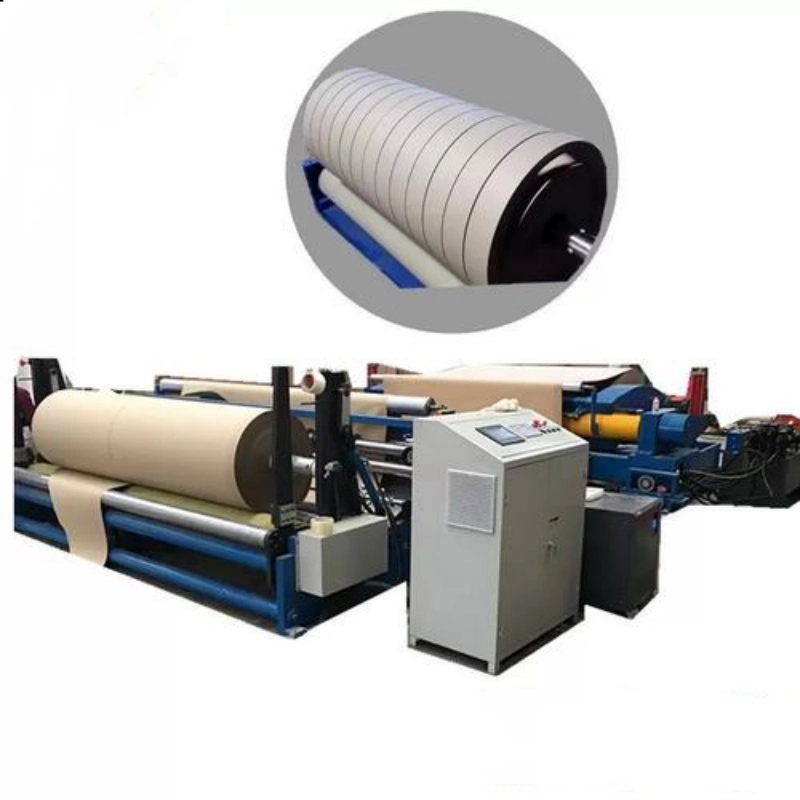
Production starts at the paper reel stand. Each paper layer is loaded onto an unwinding position, and the paper strips are pulled forward under controlled tension. This stage matters more than many buyers expect. If the unwinding tension is unstable, the paper can drift, wrinkle, or stretch, which leads to poor spiral overlap and wall thickness variation.
Guide rollers keep each strip aligned before it enters the forming section. On a well-built machine, the paper path is stable and easy to adjust. For operators, this reduces setup time when changing tube diameter or wall thickness. For buyers, it is one of the features that separates a workable machine from one that causes frequent corrections during production.
Gluing system and adhesive distribution
After alignment, the paper passes through the gluing section. Adhesive is applied to selected layers so the tube bonds firmly during winding. The amount of glue, the uniformity of the coating, and the adhesive viscosity all directly affect tube quality.
Too little glue can cause delamination or low crush strength. Too much glue increases drying time, raises production cost, and may create surface defects or internal buildup on machine parts. This is why the glue system is not just an accessory. It is a core part of the working principle.
Most spiral tube machines use water-based adhesive systems for standard paper core production. However, the right adhesive still depends on tube application, paper grade, ambient temperature, and required strength. A machine may run well with one kraft paper specification and need adjustment with another.
Spiral winding on the mandrel
Once the paper strips are glued, they move into the winding unit and wrap around a mandrel at a fixed angle. This angle creates the spiral seam that gives the machine its name. The mandrel determines the inner diameter of the tube, while the number of layers and paper thickness determine wall thickness.
Belts or winding rollers apply pressure and drive the tube forward as it forms. At this point, machine synchronization is critical. The feed speed, winding speed, glue application, and tube forward movement must all stay balanced. If one section runs out of sync, the tube may become loose, oval, or dimensionally unstable.
This is where machine design quality shows clearly. A stable frame, accurate mandrel positioning, reliable drive system, and responsive control system all support consistent tube forming at higher speeds.
Tube shaping and compression
As the paper layers wrap around the mandrel, the machine compresses them to improve bonding and shape retention. Compression removes small air gaps between layers and helps create a dense, rigid wall structure.
This stage has a direct effect on final tube performance. Tubes used for film winding, paper mill cores, or heavy industrial applications need strong concentricity and compression strength. If compression is weak or uneven, the tube may look acceptable at first but fail in downstream use.
For lighter packaging tubes, the tolerance may be more forgiving. That is why machine selection should always match the product application. A buyer producing textile cones or light consumer packaging may not need the same machine configuration as a plant supplying heavy-duty paper mill cores.
Continuous cutting to length
After forming, the tube moves continuously to the cutting unit. A synchronized cutter trims the tube into preset lengths without stopping the production flow. Depending on the machine design, cutting can be servo-controlled or mechanically timed.
Accurate cutting is essential for downstream packing and customer acceptance. Poor cut control creates length variation, rough edges, and material waste. If you are supplying industrial users who mount the tube directly onto winding shafts, cut precision becomes even more important.
A good cutting system should maintain clean edges at production speed. This is not only about blade quality. It also depends on tube feeding stability and control coordination between winding and cutting sections.
Main components that define machine performance
A spiral paper tube machine may look simple from a distance, but output quality depends on several core assemblies working together. The reel stand controls unwinding stability. The gluing system affects bonding quality. The mandrel and winding unit define tube formation. The drive system keeps speed consistent. The cutter determines final length accuracy. The electrical control system ties all of it together.
For serious buyers, the question is not only whether the machine can make tubes. Almost any machine can make a tube during a demonstration. The real question is whether it can hold tube diameter, wall thickness, bond strength, and cut tolerance during long production runs with your actual raw materials.
Factors that affect the spiral paper tube machine working principle in real production
Paper quality and layer design
The machine works according to a fixed mechanical principle, but raw material variation changes the result. Kraft paper basis weight, moisture content, stiffness, and surface finish all influence winding behavior and adhesive bonding.
A heavier wall tube usually needs more layers or thicker paper, but that also increases glue demand and load on the forming system. A faster line may require better paper consistency to maintain quality. So while output figures are useful, they should always be reviewed together with raw material specifications.
Tube diameter and wall thickness
Larger diameters and thicker walls usually reduce practical production speed. Smaller cores can often run faster, but they may require tighter control to avoid deformation. This is one reason there is no single best speed for every machine. It depends on product range.
If your business plans include multiple core sizes, machine flexibility matters as much as maximum output. Fast changeover and stable adjustment can have more value than a top speed figure that only applies to one tube specification.
Speed, control, and operator setup
Higher speed increases output, but only if the machine remains stable. If speed causes frequent rejects, shutdowns, or glue imbalance, your actual production cost rises. In many factories, the most profitable operating point is not the highest possible speed. It is the speed where quality stays consistent with acceptable waste.
Operator training also has a measurable effect. Even a well-designed machine needs proper setup for tension, glue quantity, cutting length, and winding pressure. This is why after-sales support and technical guidance matter for international buyers.
Why this matters when choosing a machine
Understanding the working principle helps buyers compare machines on the points that affect long-term return. You can ask better questions about reel stand design, adhesive control, mandrel range, cutting accuracy, motor configuration, and supported tube sizes. You can also evaluate whether the supplier understands your application or is only selling on price.
For importers and factory investors, this reduces procurement risk. For production teams, it improves startup planning. For expanding manufacturers, it helps align machine capacity with customer demand instead of buying either too small or unnecessarily complex equipment.
A reliable supplier should be able to explain not just the machine specification, but how the machine maintains bonding strength, dimensional consistency, and cutting precision across different tube requirements. That level of clarity is often a better sign of manufacturing experience than a broad speed claim.
NRC Machine serves buyers who need that practical clarity because machine performance is judged on factory output, not catalog language.
Common operating issues and what they usually mean
When tubes open at the seam, the issue is often glue quality, glue amount, or insufficient forming pressure. When tube diameter varies, check paper tension, mandrel stability, and web alignment. When cut lengths are inconsistent, the cause is usually cutter synchronization or unstable tube feed speed.
These are not isolated faults. They are connected to the same working principle. A spiral paper tube machine is a continuous system, so one weak adjustment can affect the entire line. That is why troubleshooting should focus on process balance rather than one component at a time.
For buyers planning a new line, the best decision is usually the machine that offers stable operation, accessible adjustment, and dependable support after delivery. A spiral paper tube machine is not just forming paper into a cylinder. It is converting paper, glue, speed, and control into a sellable industrial product. If that process stays balanced, production stays profitable.