Nguyên liệu thô và cấu trúc sợi
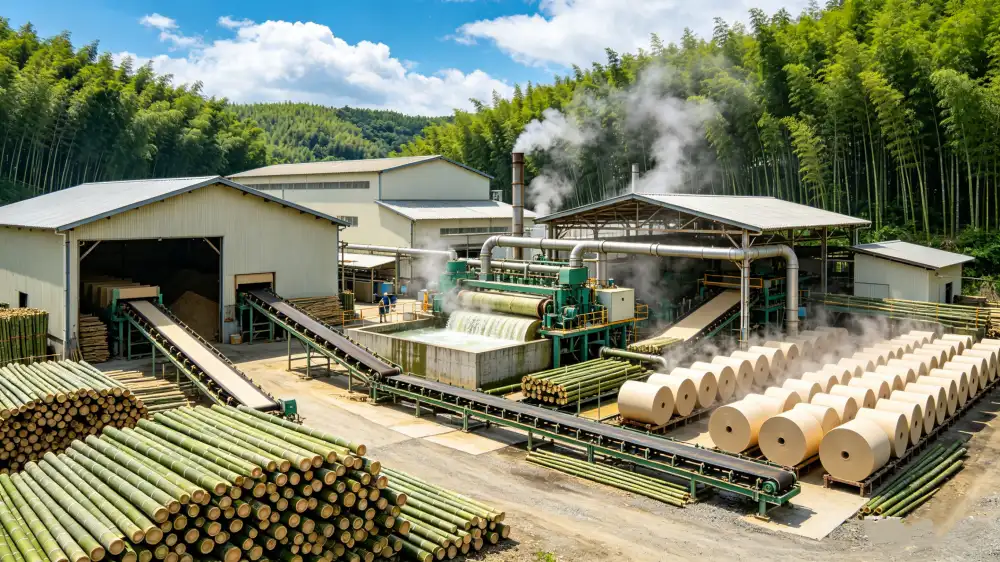
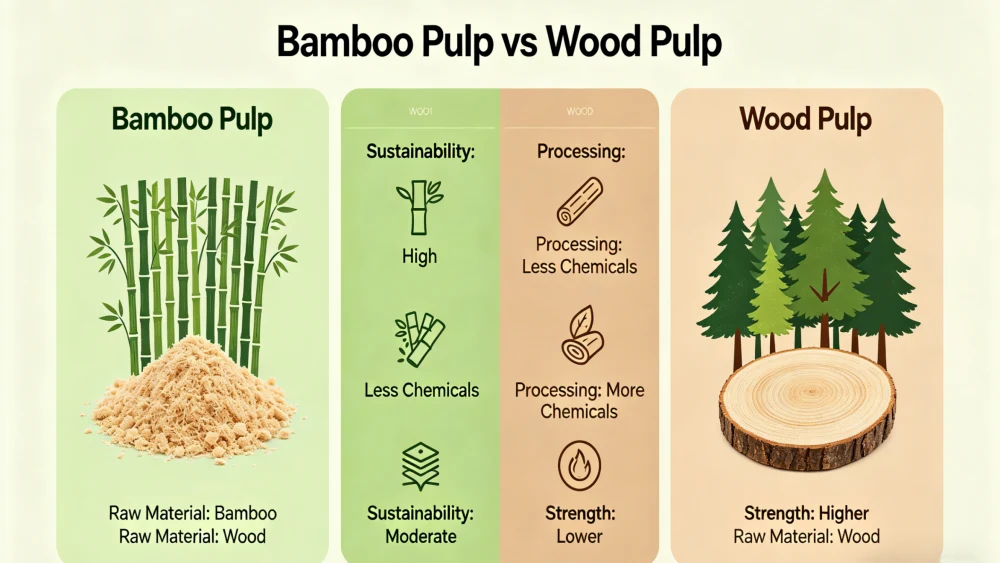
- Bột tre
- Chiều dài sợi: 5–2,0 mm(giữa gỗ cứng và gỗ mềm)
- Cellulose: >90%; Lignin: <20%
- Chu kỳ sinh trưởng: 3–5 năm; năng suất cao (~301 tấn/ha)
- Bột gỗ
- Gỗ mềm: Sợi dài 2,5 mm (độ bền); Gỗ cứng: Sợi ngắn 1 mm (độ mềm mại)
- Chu kỳ sinh trưởng: 25–30 tuổi(gỗ cứng), 40–50 tuổi (gỗ mềm)
Quy trình sản xuất và tác động đến môi trường
| Khía cạnh | Bột tre | Bột gỗ |
| Sử dụng năng lượng | 30% trừ năng lượng; sấy khô ~700–800 kWh/tấn | Cao hơn; sấy khô ~1.000 kWh/tấn |
| Lượng nước tiêu thụ | 25% dưới | Cao hơn |
| Khí thải | 40% trừ các hợp chất lưu huỳnh | Nồng độ chất ô nhiễm cao hơn |
| Hấp thụ carbon | Hấp thụ 30%: Lượng CO₂ cao hơn hơn các đồn điền cây | Thấp hơn |
| Tẩy trắng | ECF/TCF (nhẹ hơn) | Dạng clo (mạnh hơn) |
Hiệu suất của giấy lụa
- Sự mềm mại: Tre +18%so với bột gỗ thông thường; bột gỗ (gỗ cứng) có độ mềm cực cao
- Khả năng thấm hút: Tre +21%; độ bền khi ướt tuyệt vời
- Sức mạnh: Độ bền kéo của tre +20%; bột gỗ (hỗn hợp gỗ mềm) có độ bền khô cao
- Kháng khuẩn: Tre có Bamboo-kun(ức chế 60% (vi khuẩn); bột gỗ không có tính kháng khuẩn tự nhiên
- Kết cấu: Tre: màu be tự nhiên, có bề mặt hơi nhám; Bột gỗ: màu trắng sáng, cực kỳ mịn màng
Chi phí và vị thế thị trường
- Bột tre
- Giá: 5.800–6.500 yên/tấn(Trung Quốc, 2025)
- Ưu điểm: Nguồn cung ổn định trong dài hạn, thương hiệu sinh thái cao cấp
- Nhược điểm: Chi phí xử lý cao hơn, công suất toàn cầu hạn chế
- Bột gỗ
- Giá: Biến động (thị trường toàn cầu); gỗ cứng nhập khẩu ~6.000 yên/tấn
- Ưu điểm: Hệ thống chuỗi cung ứng đã phát triển, sản xuất quy mô lớn
- Nhược điểm: Nguy cơ phá rừng, áp lực từ thuế carbon
Bền vững & Ứng dụng
- Bột tre
- Phát triển bền vững: Có khả năng tái tạo cao, được chứng nhận FSC/OEKO-TEX, có thể phân hủy sinh học
- Phù hợp nhất cho: Giấy vệ sinh cao cấp, sản phẩm vệ sinh, giấy tiếp xúc với thực phẩm, các thương hiệu thân thiện với môi trường
- Bột gỗ
- Tính bền vững: Phụ thuộc vào việc quản lý rừng; có các lựa chọn được chứng nhận FSC/PEFC
- Phù hợp nhất cho: Giấy vệ sinh đại trà, giấy lau mặt siêu mềm, các sản phẩm giá rẻ
Tóm tắt
- Bột tre: Hạng cao cấp phát triển bền vững, kháng khuẩncác thuộc tính, và khả năng thấm hút; lý tưởng cho giấy vệ sinh cao cấp thân thiện với môi trường.
- Bột gỗ: Vô song sự mềm mạivà hiệu quả về chi phí; chiếm ưu thế trong các sản phẩm đại trà.
- Xu hướng: Bột giấy hỗn hợp (40% tre + 60% gỗ) cân bằng giữa hiệu suất, chi phí và tính bền vững.
Câu hỏi thường gặp
1. Về đặc tính nguyên liệu, những điểm khác biệt chính giữa bột tre và bột gỗ là gì?
Bột tre có sợi dài 5–2 mm, hàm lượng cellulose trên 90% và hàm lượng lignin dưới 20%, với chu kỳ sinh trưởng từ 3–5 năm. Bột gỗ thường được sản xuất từ gỗ mềm và gỗ cứng, với chiều dài sợi lần lượt là 2,5 mm và 1 mm, và chu kỳ sinh trưởng dài hơn, từ 25–50 năm.
2. Tác động môi trường của sản xuất bột tre so với bột gỗ thì sao?
Quá trình sản xuất bột giấy tre tiêu thụ ít hơn khoảng 30% năng lượng và nước, thải ra ít hơn 40% hợp chất lưu huỳnh và hấp thụ nhiều hơn 30% CO₂ so với bột giấy gỗ, do đó thân thiện hơn với môi trường.
3. Giấy lụa làm từ bột tre có những ưu điểm gì so với giấy lụa làm từ bột gỗ?
So với giấy bột gỗ mịn hơn, siêu mềm nhưng không có tính kháng khuẩn, giấy lụa tre mềm hơn 18%, thấm hút tốt hơn 21%, có độ bền kéo cao hơn 20%, sở hữu tính kháng khuẩn giúp ức chế 60% vi khuẩn, và có bề mặt màu be tự nhiên với kết cấu đặc trưng.
4. So với bột giấy gỗ, bột giấy tre có những ưu điểm và nhược điểm gì trên thị trường?
Bột tre mang lại nguồn cung ổn định lâu dài và hình ảnh thương hiệu thân thiện với môi trường cao cấp, nhưng lại có chi phí chế biến cao hơn và công suất hạn chế. Ngược lại, bột gỗ sở hữu chuỗi cung ứng đã phát triển hoàn thiện và quy mô lớn, nhưng lại phải đối mặt với rủi ro về nạn phá rừng và thuế carbon.
5. Các ứng dụng chính và những yếu tố cần xem xét về tính bền vững của bột tre và bột gỗ là gì?
Bột tre là nguyên liệu có khả năng tái tạo cao, được chứng nhận FSC/OEKO-TEX và phù hợp để sản xuất các sản phẩm cao cấp và thân thiện với môi trường. Tính bền vững của bột gỗ phụ thuộc vào việc quản lý rừng có chứng nhận FSC/PEFC, và nó thường được sử dụng để sản xuất giấy vệ sinh đại trà và các sản phẩm giá rẻ.